Why methanol
Shipping has to change its fuel. Methanol is the one that pours.
Of the clean fuels on offer, methanol is the one that stays liquid in an ordinary tank, like the oil it replaces. The ships are being built for it. The green fuel to fill them is not.
01 · The rule
Europe’s rule tightens every five years. All the way to 2050.
FuelEU Maritime sets how much cleaner the energy on board must be than in 2020. Every ship over 5,000 gross tonnes calling at an EU port is in scope.
- 2%2025
- 6%2030
- 14.5%2035
- 31%2040
- 62%2045
- 80%2050
- From 2026. Shipping pays for all of its covered emissions under the EU carbon market, now including methane and nitrous oxide.
- In full or by half. Voyages between EU ports count in full. Voyages into or out of the EU count by half.
- December 2026. IMO member states return to a global net-zero framework for shipping. The outcome is open.
Sources: Regulation (EU) 2023/1805 (FuelEU Maritime), Art. 4. IIMS, “New EU ETS rules take effect from January 2026”. Ammonia Energy Association, “MEPC84”, May 2026.
03 · Ready now
The ships, engines and ports already exist.
- 293
- methanol-capable ships on order for delivery by 2030
- 100+
- ports already store methanol, 47 of them with more than 50,000 t of storage
- 2023
- first barge-to-ship methanol bunkering on the U.S. Gulf, at Port Houston
Sources: DNV Alternative Fuels Insight, September 2026. Methanol Institute, via Container News. gCaptain, April 2023.
04 · The catch
The ships are coming. The green fuel is not.
- ~7 Mt
- of renewable methanol a year that shipping will need by 2030
- ~6 Mt
- a year for one carrier’s fleet alone by 2030
- ~5×
- what bio-methanol costs today against conventional marine fuel
Demand is written into law and the supply is short and expensive. Whoever can make green methanol at a cost lenders will finance holds the scarce side of the market.
Sources: World Shipping Council, via Ship & Bunker. GENA Solutions for the Methanol Institute, via Ship & Bunker (Maersk estimate).
05 · Why from waste
The cheapest carbon is the carbon cities pay to bury.
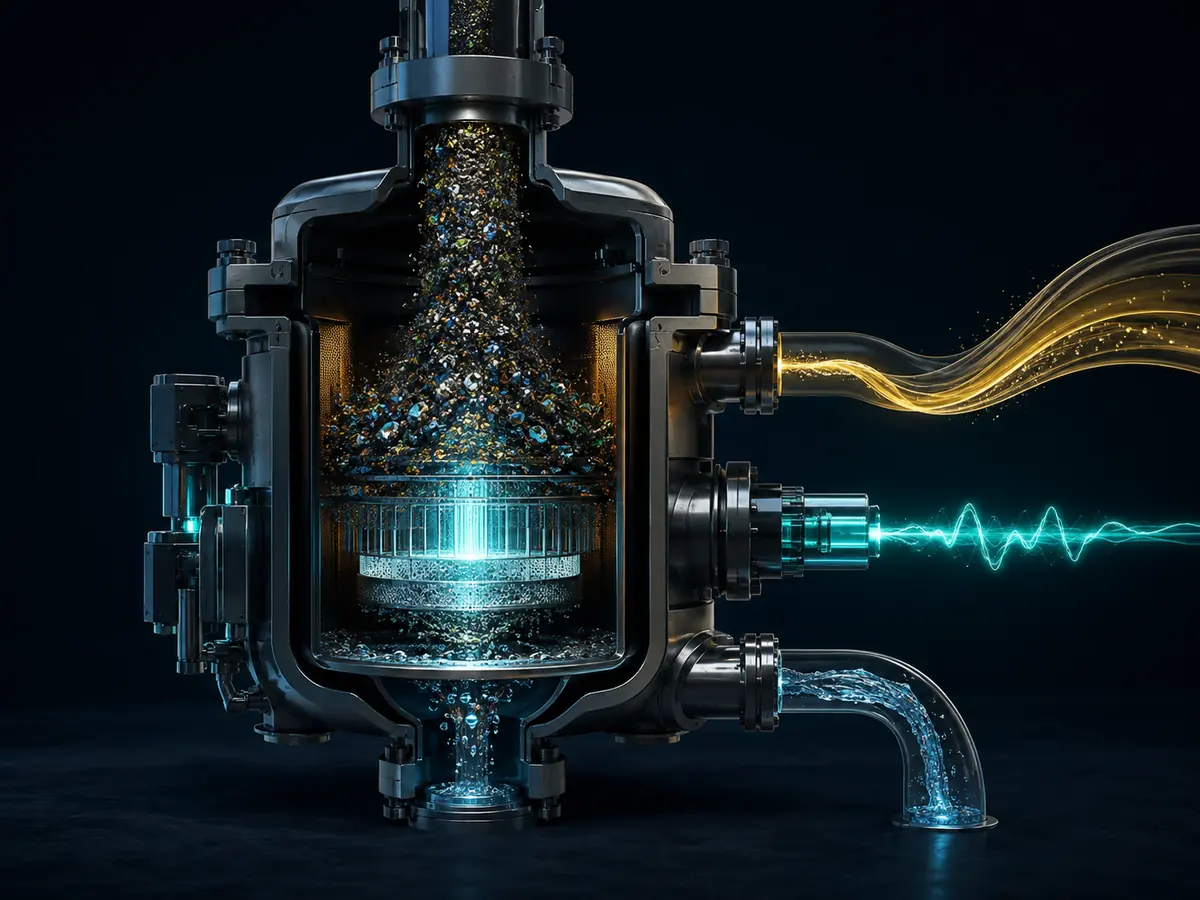
Municipal waste is mostly paper, food and wood: carbon that came from plants. Gasified and made into methanol, it becomes the fuel shipping is short of, from a feedstock that already has a collection system and a disposal bill.
146M t
of municipal waste went to U.S. landfills in a single year. Half of everything collected.
Source: U.S. EPA, Advancing Sustainable Materials Management, 2018 fact sheet.